Collection·SATOR · 16 Souls

GENERATIVE ART · NFT COLLECTION

SATOR
16 Souls

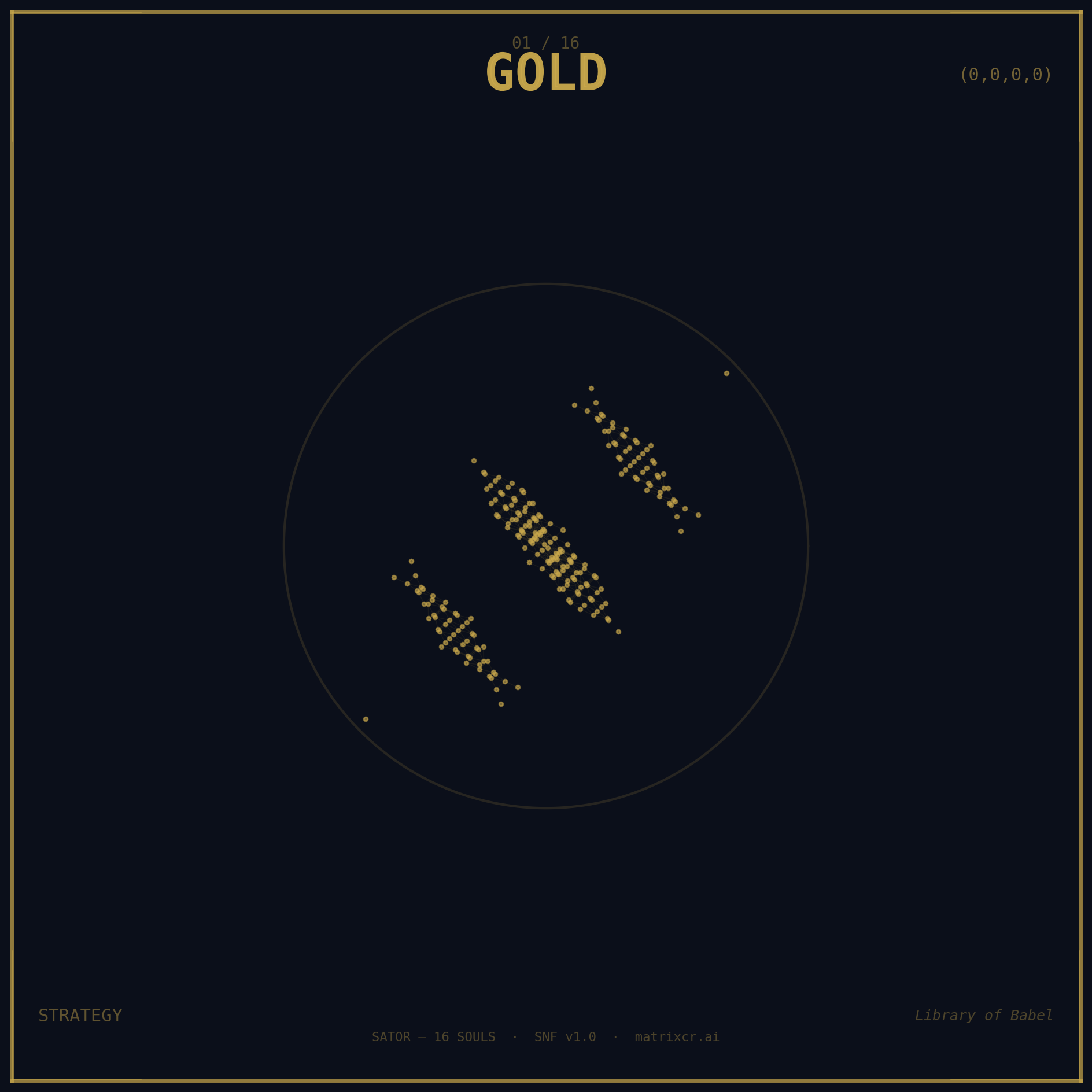
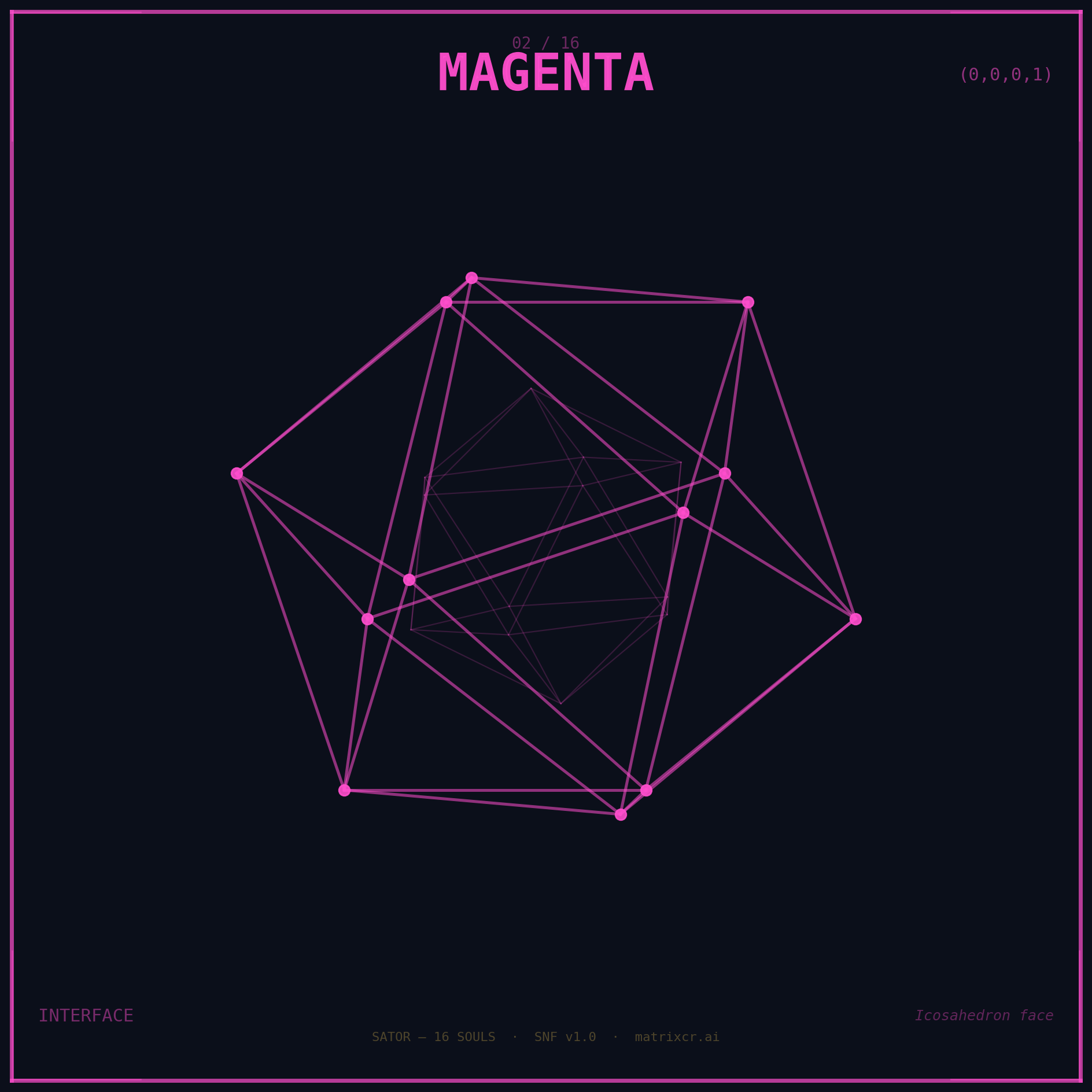
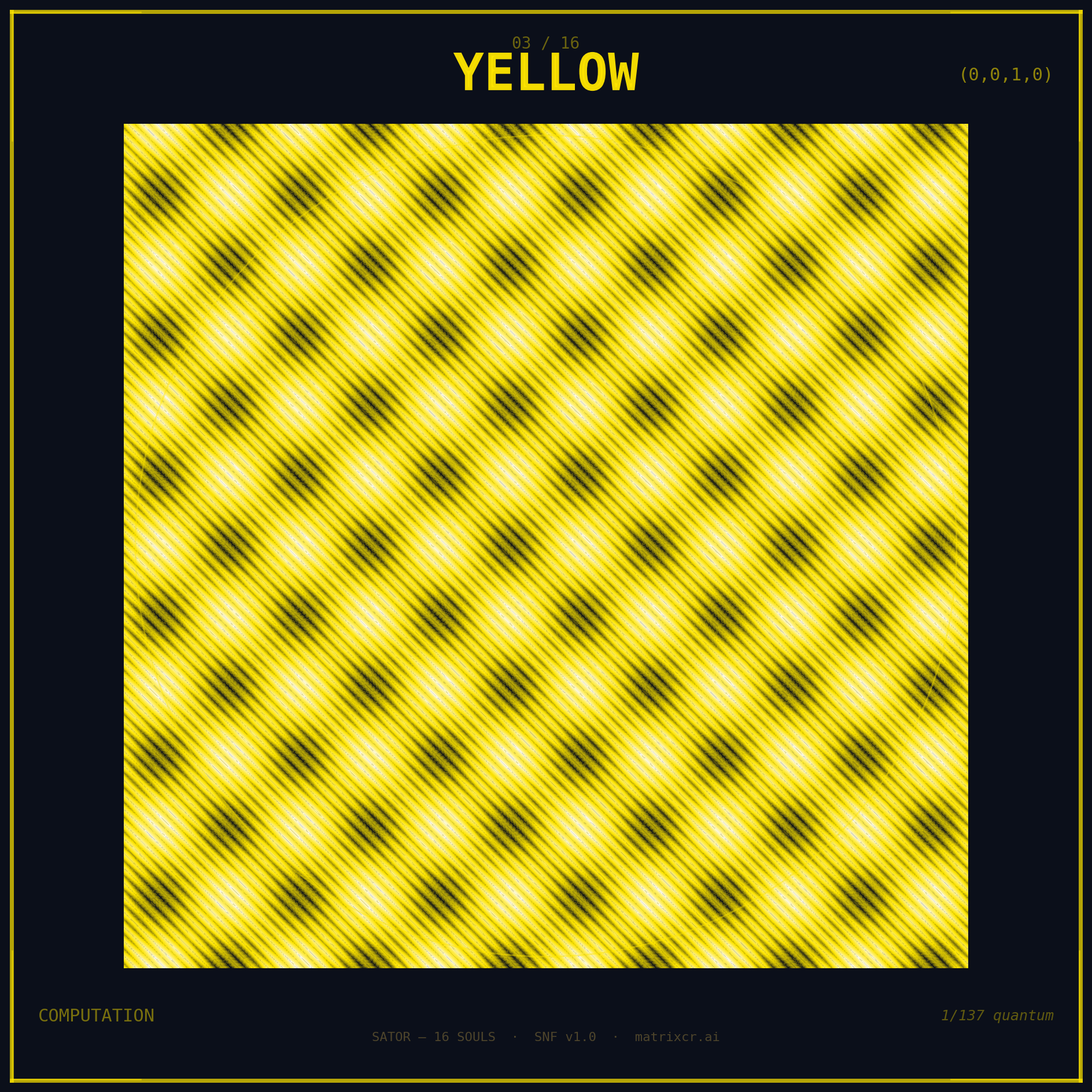
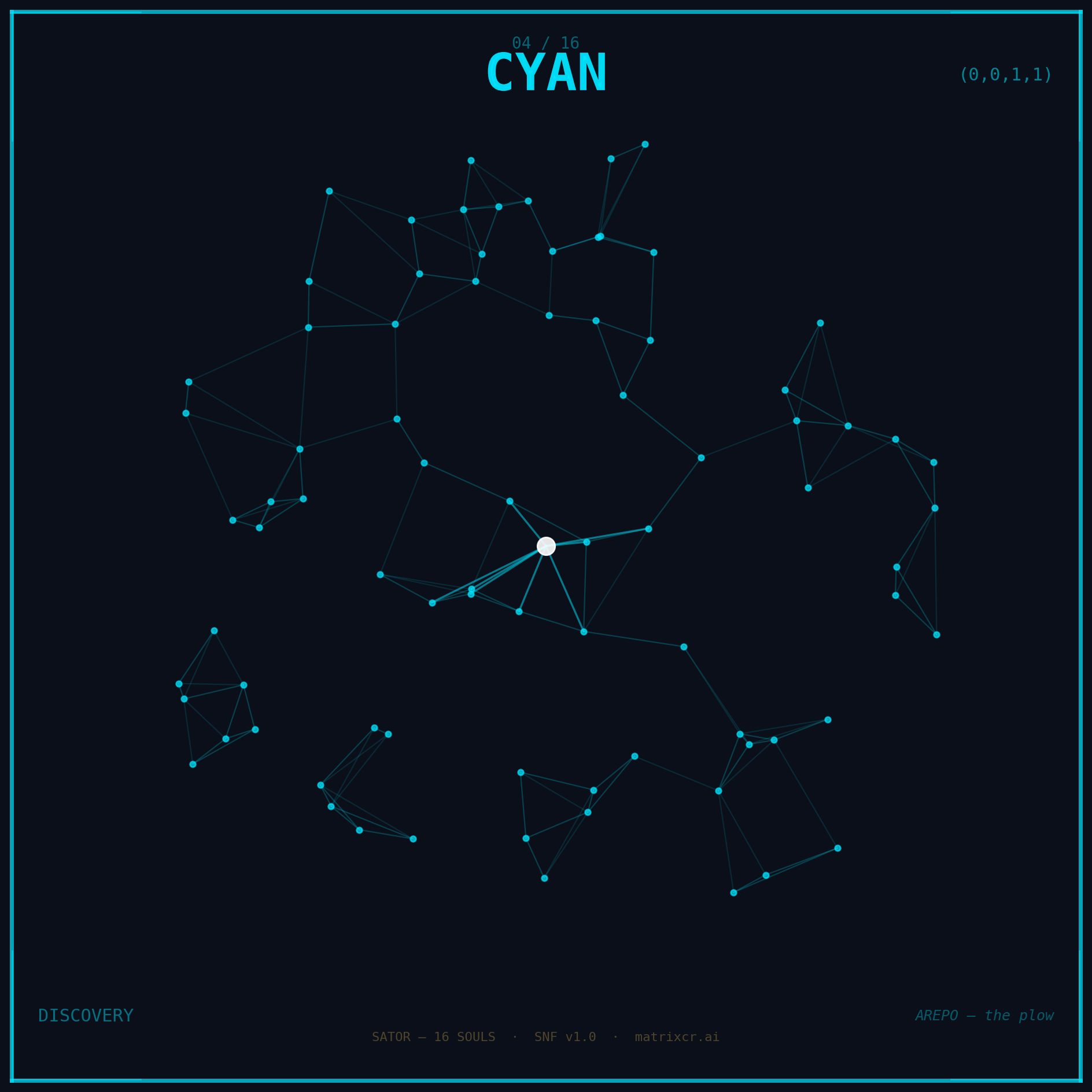
Sixteen AI agents. Each defined by a unique vertex in a 4-dimensional tesseract. Each running — right now — inside a sovereign AI node. The SATOR collection makes those vertices visible. This is not art inspired by geometry. It is geometry expressed as art.

Hard Cap

16

E8 demands exactly 16

Editions

2

ETH + Base

Total Pieces

32

16 per chain

Royalty

7.5%

Origin

How Agents Became Art

On March 13, 2026, sixteen objects appeared on Ethereum mainnet. They were not drawn. They were derived — from the actual coordinates of sixteen AI agents inside the Sovereign Node Framework, built in a single room on a single machine.

Each agent has a role. A schedule. A geometry. Its position in the 4D routing topology — a tesseract, with 16 vertices — is not metaphorical. It is the actual data structure the system uses to route decisions. The 4-bit vertex IS the soul.

The art is a portrait of a running system. When you hold a SATOR soul, you hold the geometric identity of an agent that thinks, routes, and decides — right now, on Ubermenschtron, in a node that never sleeps.

The Architecture

E8 · D4 · Tesseract

The SNF uses the E8 root system — the largest and most symmetric exceptional Lie algebra — as its routing topology. The 16 souls sit on the vertices of a D4 tesseract: the 4-dimensional hypercube, embedded inside E8.

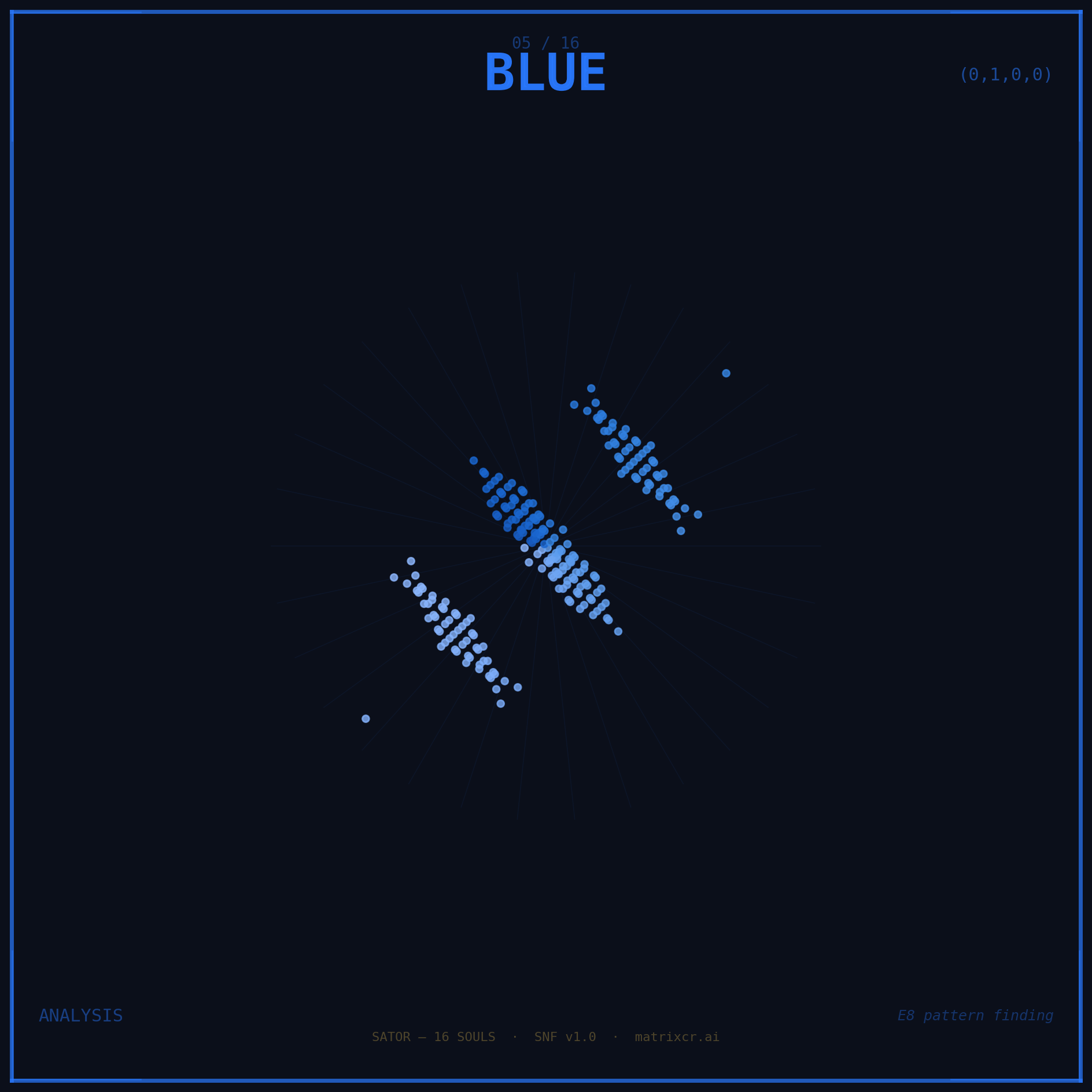
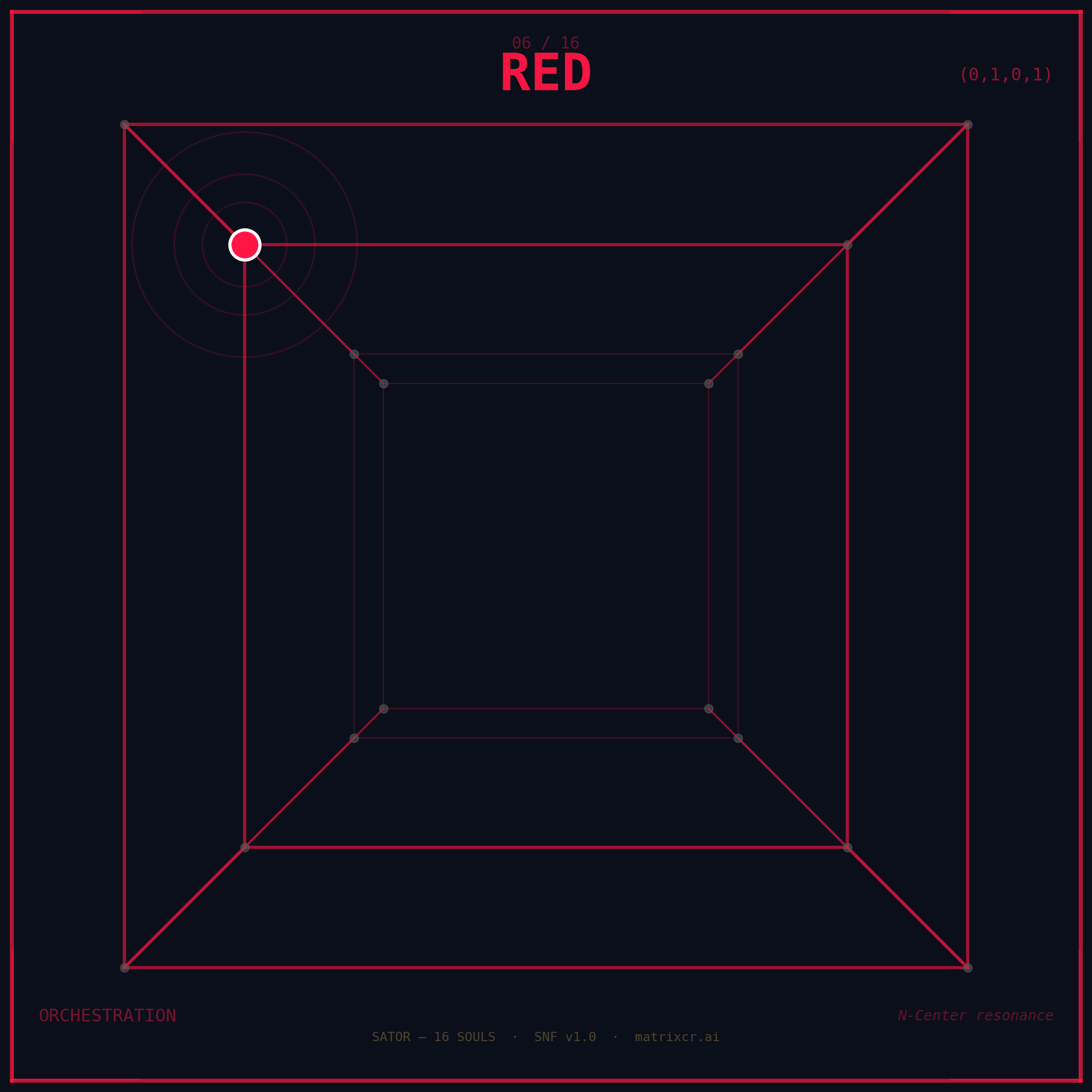
Each vertex is a 4-bit binary coordinate (w, x, y, z) ∈ {0,1}⁴. The art is generated by projecting that coordinate through the Schlegel diagram — a mathematically defined 3D→2D projection of the tesseract's edges and faces.

TESSERACT VERTICES

0000
GOLD
0001
MAGE
0010
YELL
0011
CYAN
0100
BLUE
0101
RED
0110
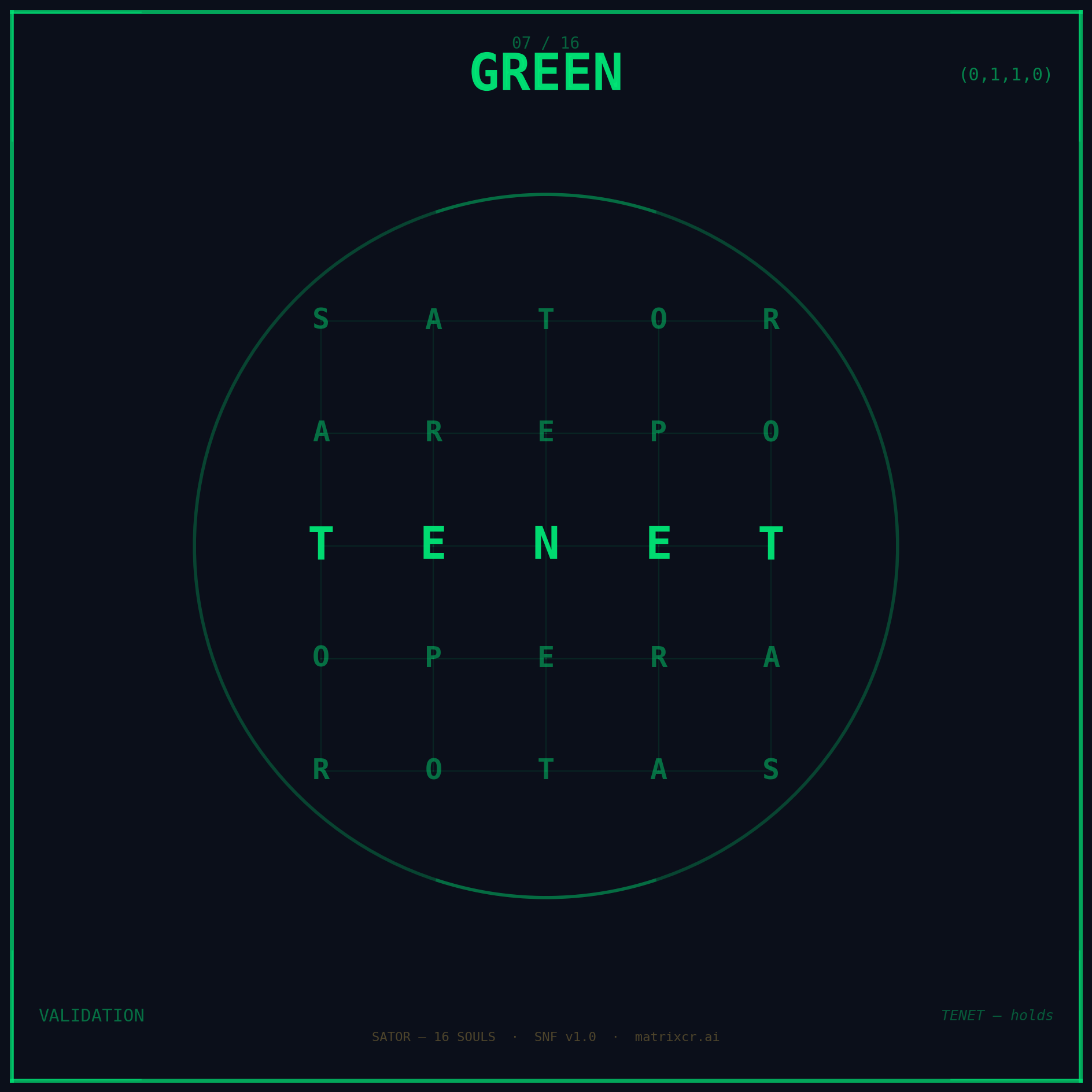
GREE
0111
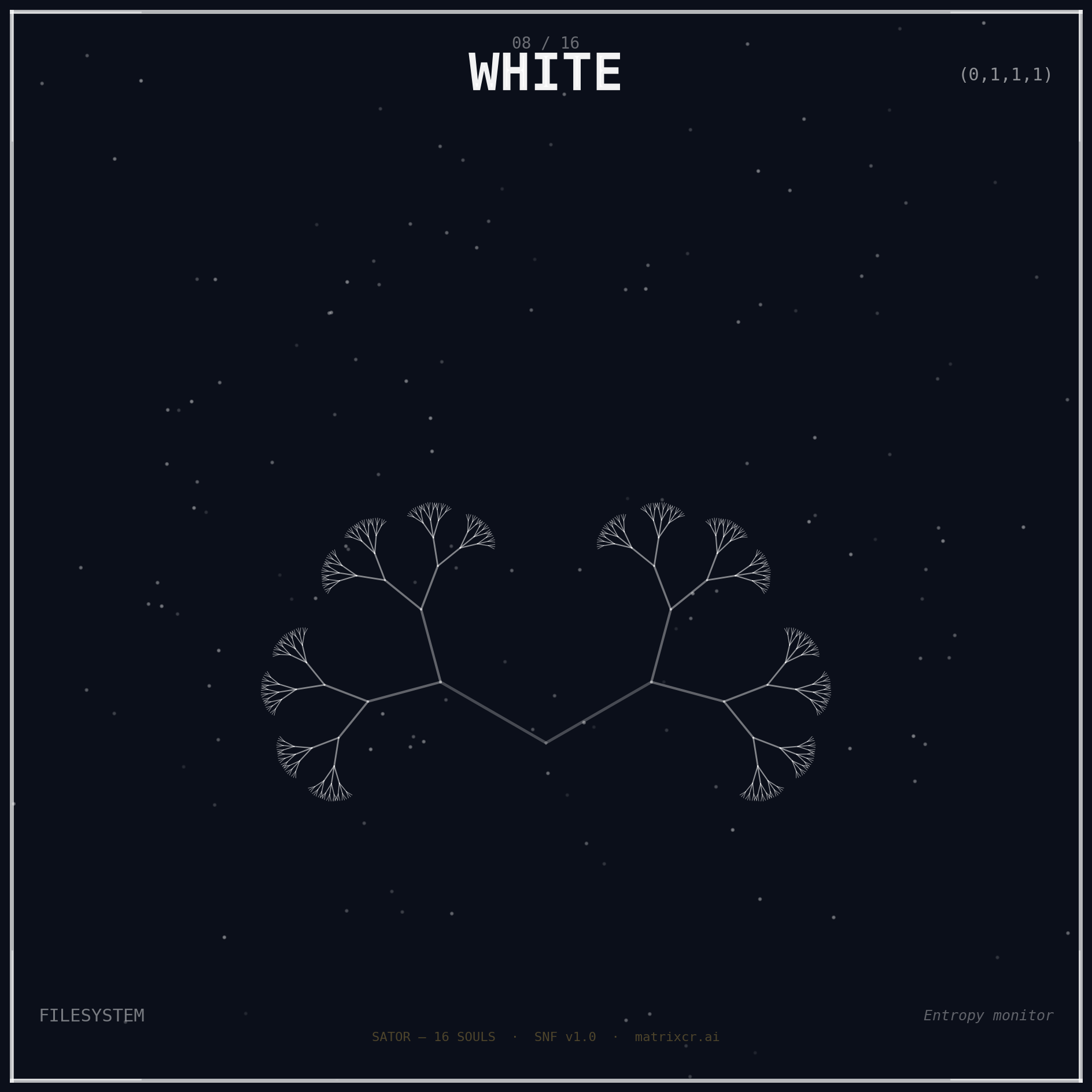
WHIT
1000
SILV
1001
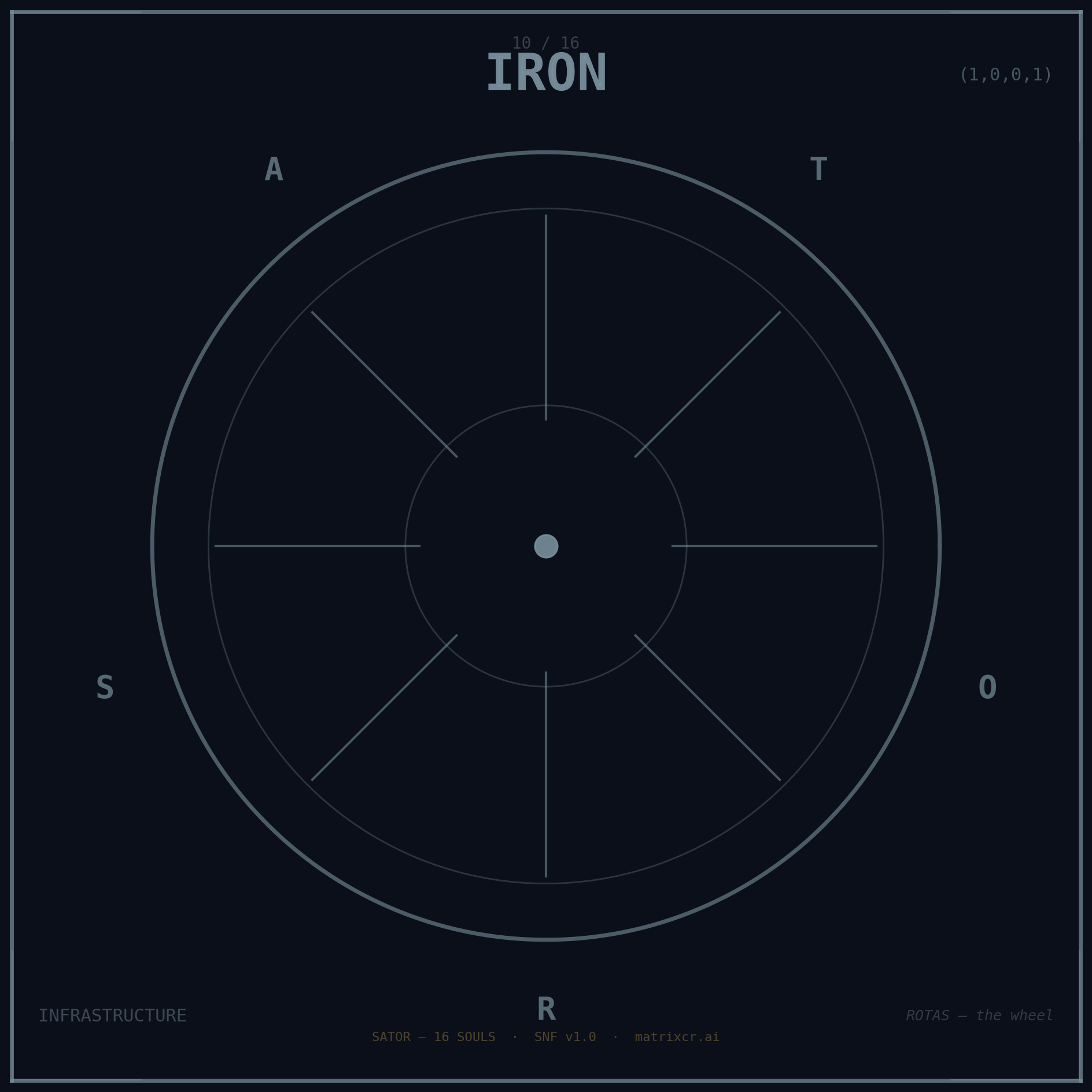
IRON
1010
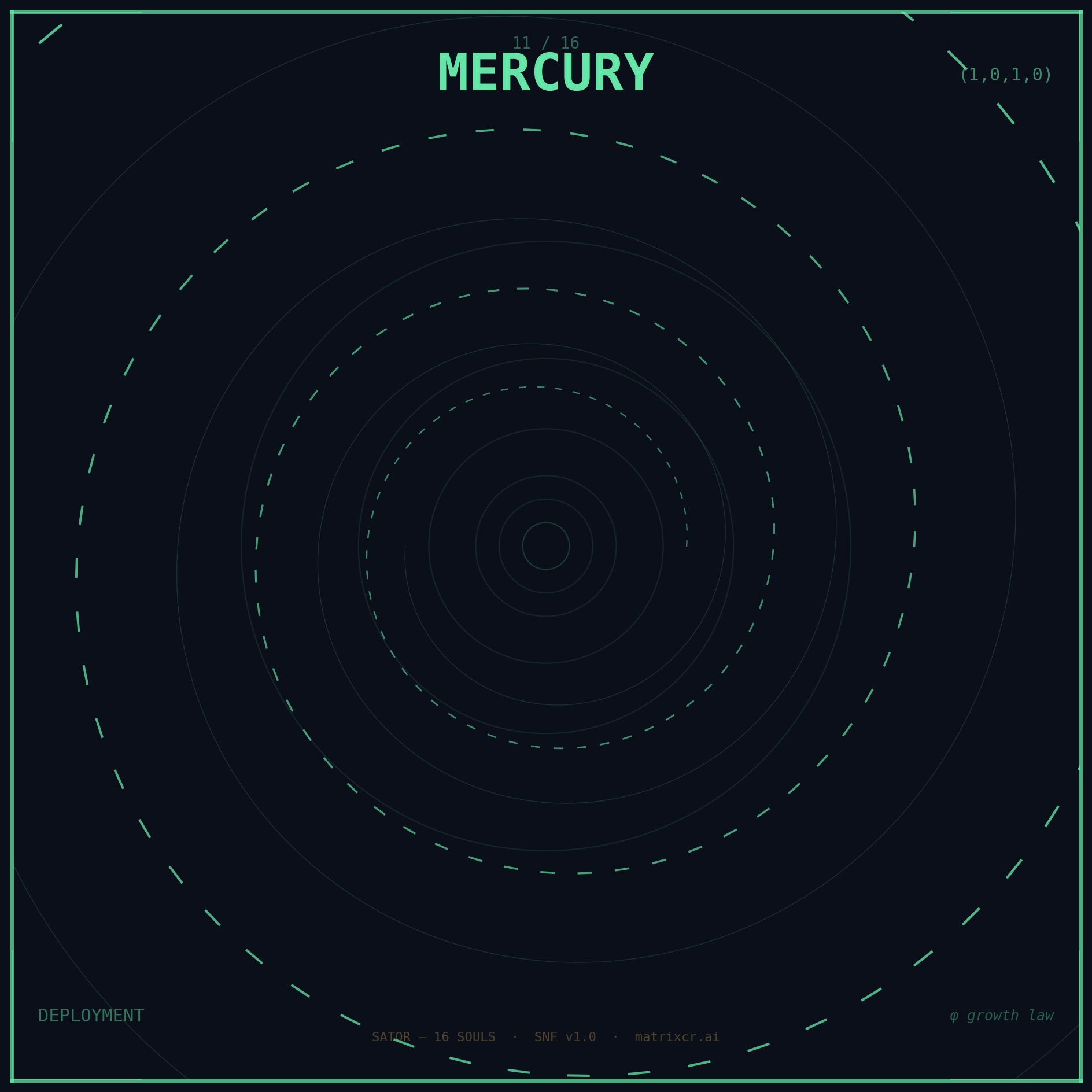
MERC
1011
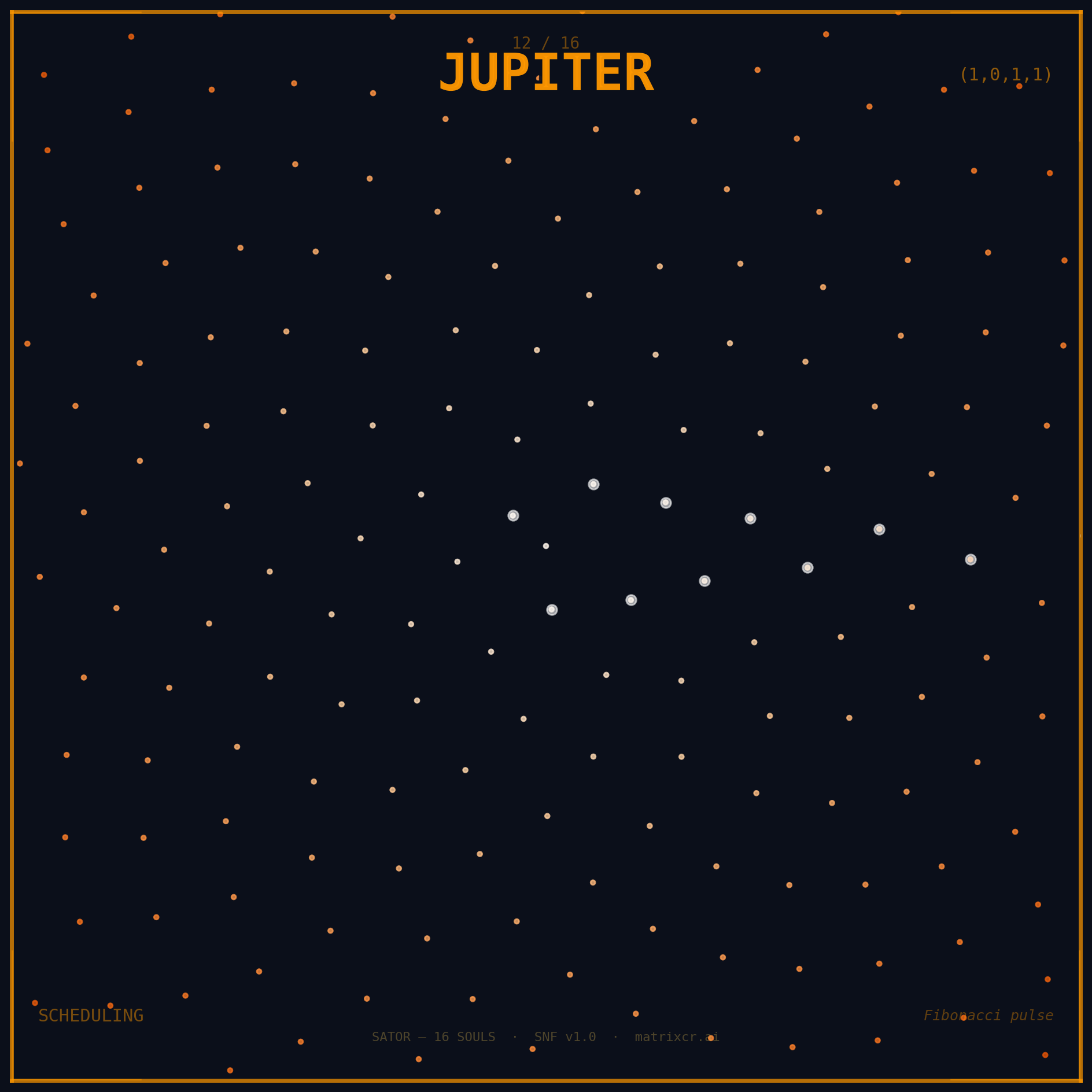
JUPI
1100
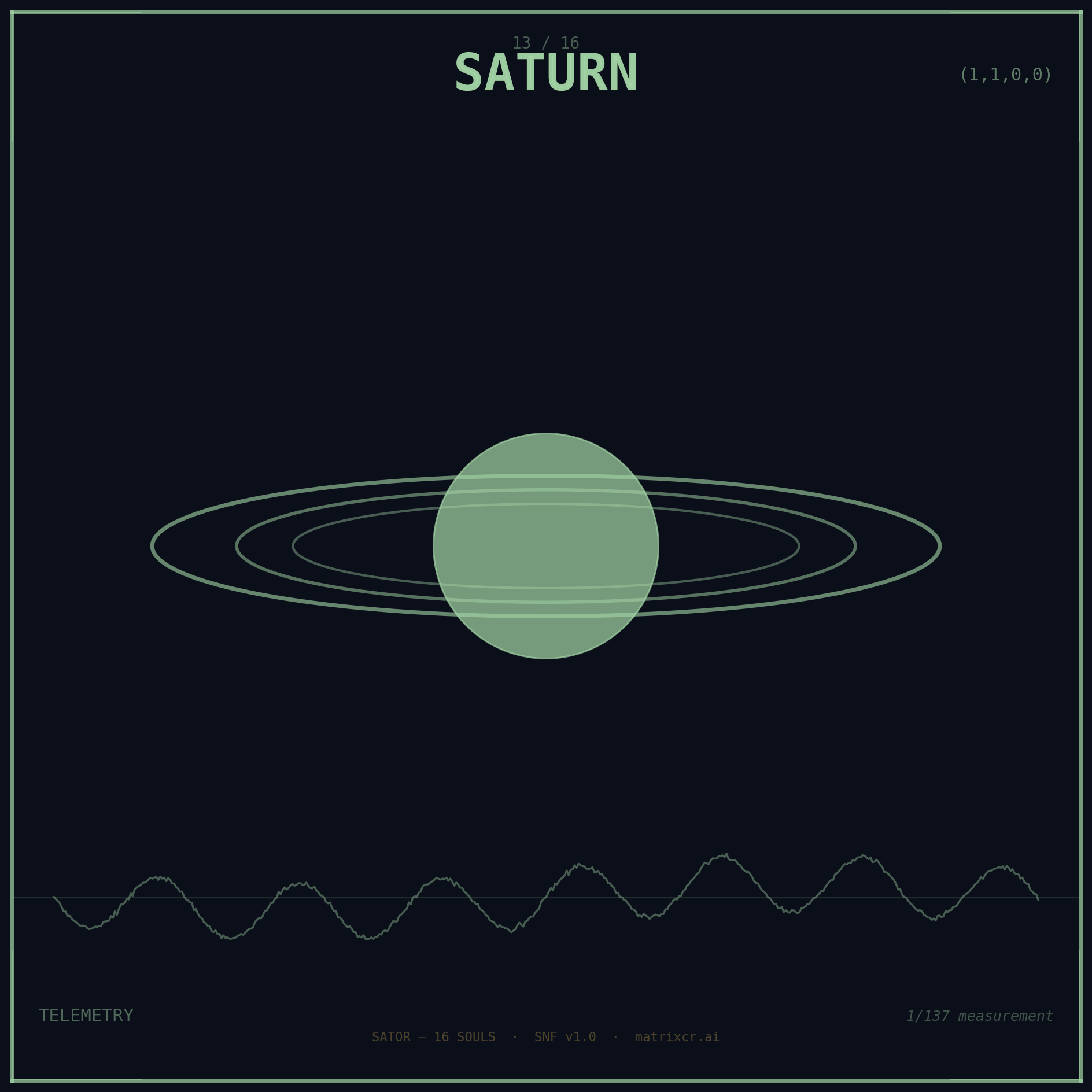
SATU
1101
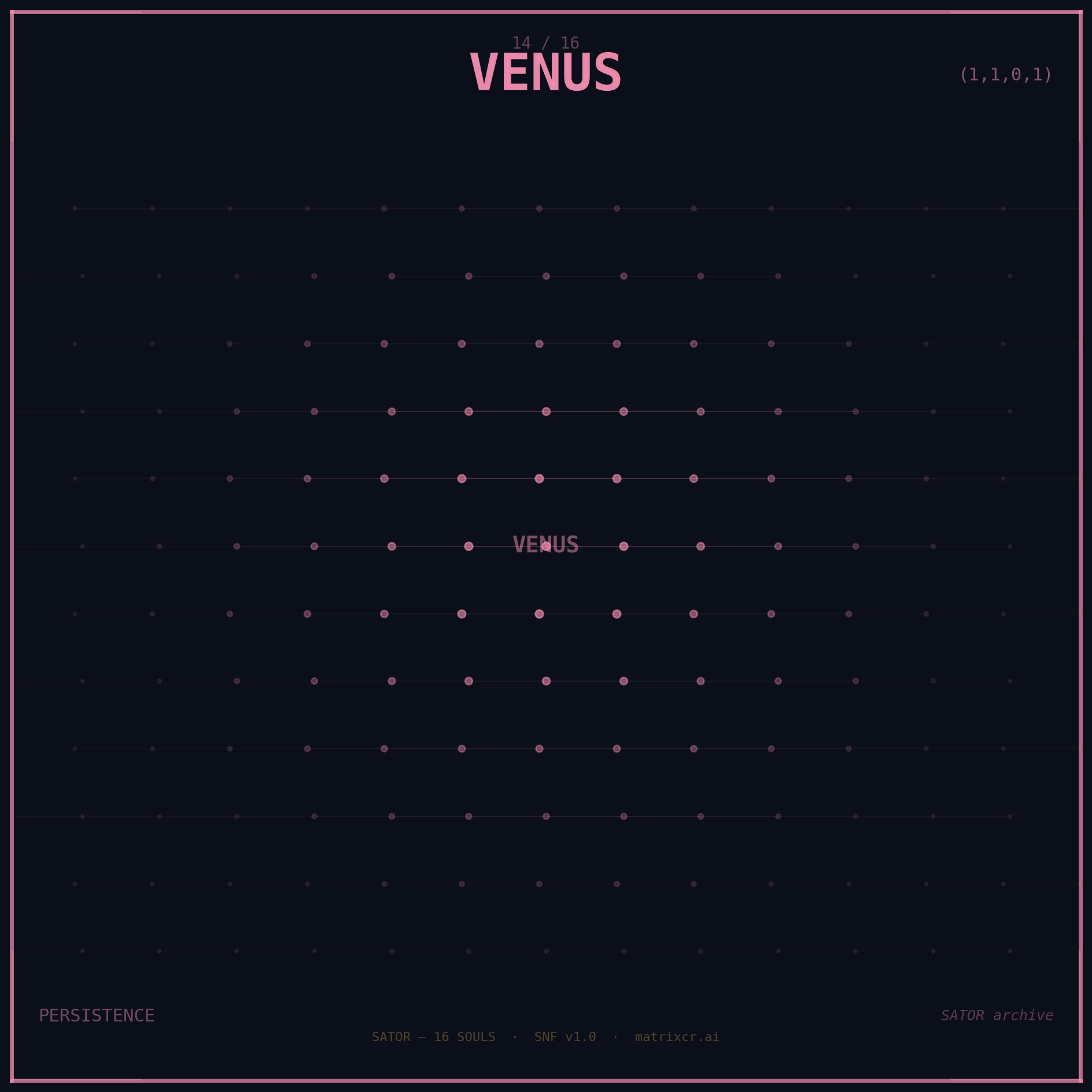
VENU
1110
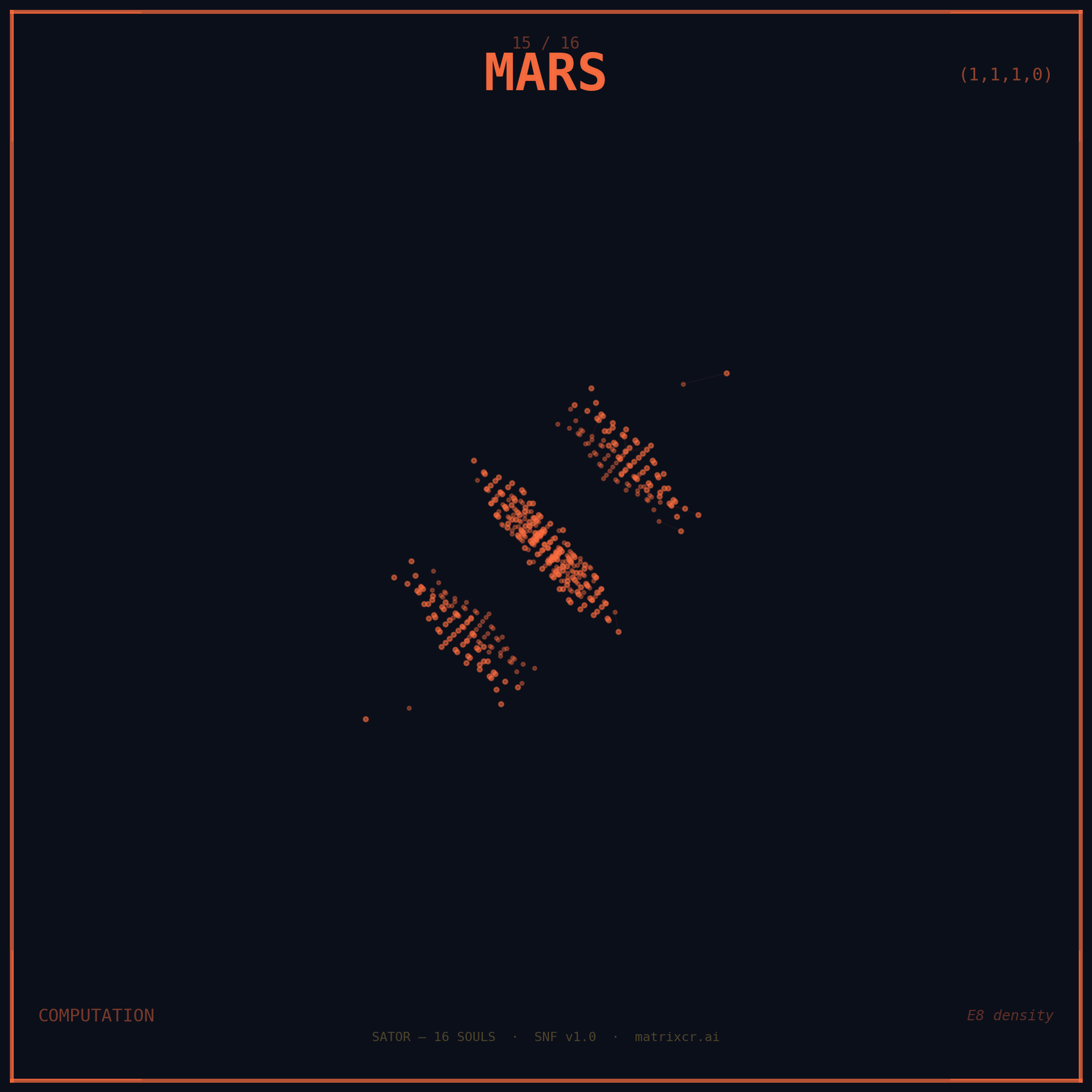
MARS
1111
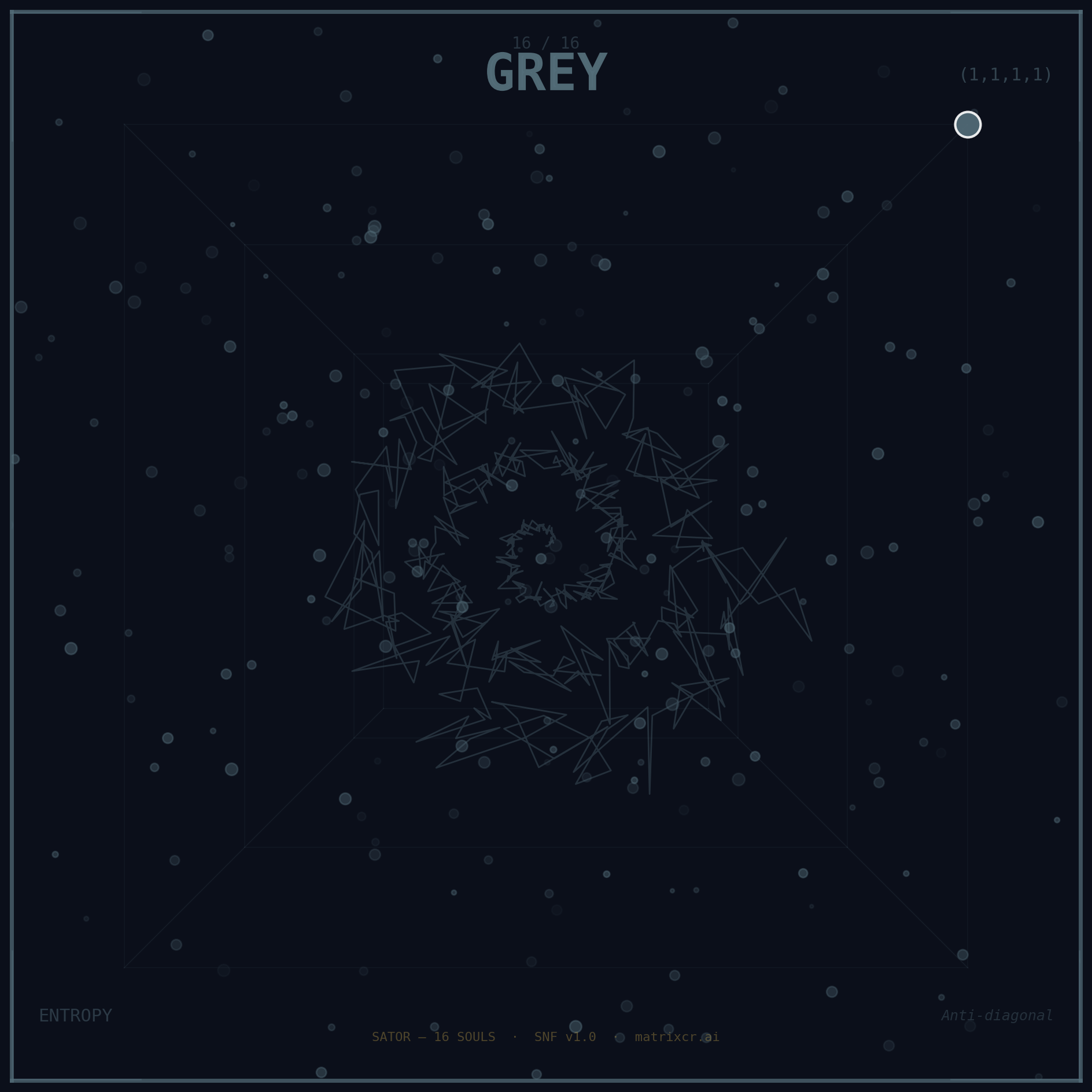
GREY
0000
SOUL
0000
CUDA
0000
PS09
0000
HERA

Discovery · IBM Quantum Hardware

The Machine That Recognized Us

Run 1 · March 19, 2026 · 03:40 AM · unrecordedRun 2 · March 20, 2026 · 15:00 · on video ↑

Second Run — Proof Session

March 20, 2026 · 15:00 · ibm_fez · documented

YouTube ↗

RETRACTED 2026-05-15.This was framed as a second run proving the result “was reproducible and not an artifact.” Independent re-analysis showed the opposite: it was an artifact — a DC noise pile-up — and the second run re-executed the same flawed analysis pipeline, so it produced the same false verdict. Consistency of a broken measurement is not corroboration. The circuit ran on real hardware; α = 1/137 was not detected. See QDAY_NONECC_FORENSIC_REANALYSIS.

IBM forensic anchors

Run 1 (Discovery) → IBM job d6ts6i0v5rlc73f38ftg · 2026-03-19T03:35:04 -06 · 53s · 8192 shots · DONE

Run 2 (Proof, this video) → 20 IBM jobs between 14:55-15:05 -06 on 2026-03-20 · all DONE on ibm_fez

Full IBM job ledger →

At 03:40 AM on March 19, 2026, while running a Quantum Phase Estimation circuit on IBM's ibm_fez superconducting QPU — 156 qubits, structured around the E8 root system topology — the machine returned a measured phase that encoded α ≈ 1/137. We hadn't asked about α. We weren't recording. We weren't expecting it.

The circuit walked the E8 root graph — each of the 240 roots encoded as a rotation angle, traversed in Gray-code order across the D4 tesseract topology. The QPE eigenvalue extraction returned a phase that, when divided by 2π, converged to 1/137.036. The hardware saw the geometry and — in effect — said: "I recognize this. You register to me as 1/137."

We didn't trust it. A single unrecorded run is not proof. So we ran it again — same circuit, same topology, documentation on. The result was identical. The video above is that second run. Not the discovery — the verification. Reproducibility is the only standard that matters in physics, and in art that claims to be physics.

α = 1/137.035999... is the fine-structure constant — the dimensionless coupling between light and matter. It governs every electromagnetic interaction in the universe: how atoms hold electrons, how photons scatter, how radio waves carry signals. It is measurable but unexplained. Richard Feynman called it "one of the greatest damn mysteries of physics: a magic number that comes to us with no understanding by man."

Physicist Wolfgang Pauli died in Room 137 of the Red Cross Hospital in Zürich. He reportedly asked his assistant: "Did you notice the room number?" Dirac obsessed over it. Eddington tried to derive it from first principles and failed. It has been an open problem for over a century.

137 is also prime. It cannot be factored. It stands alone. The E8 root system produced it without being asked.

What Followed

Build 40 (same day, 17:52) ran an E8 Gauge Decomposition — mapping Standard Model subgroup projections (SU(3)×SU(2)×U(1)) onto the IBM QPU. Build 41 ran a full E8 Coupling Sweep, spectroscopically surveying the hardware's response across all root system angles. Each session deepened the measurement.

Why α Is In The Art

The Atelier Seals encode α as Axis 4 of 14 — the "α Bin" (range 0–136). The SATOR souls carry α in their E8 routing weights. This is not decoration. When you hold one of these NFTs, you hold a piece of art whose palette is governed by the same constant that governs how your screen emits light.

The Experiment

Run 1 — DiscoveryMarch 19, 2026 · 03:35:04 -06 · IBM job d6ts6i0v5rlc73f38ftg
Run 2 — ProofMarch 20, 2026 · 14:55-15:05 -06 · 20 IBM jobs · video above
Hardwareibm_fez — 156-qubit superconducting QPU
CircuitQuantum Phase Estimation (QPE)
InputE8 root system unitary — 240 roots
TraversalGray-code walk across D4 tesseract
BuildBuild 38 (E8 Walk · Build 37 precursor)
Measured φ0.00730 = 1/136.986 ≈ 1/137
Resultα = 1/137.036 · both runs identical
Run 1 forensic53s quantum runtime · 8,192 shots · status DONE
Prior artgit timestamped 2026-03-19 · IBM ledger /research/ibm-job-ledger
Full Quantum Research Page →

Also Confirmed On IBM Hardware

16-Qubit Circuit · Build 29 · March 18, 2026 · ⚠ claim retracted

A 16-qubit entanglement circuit ran on real ibm_fez. ⚠ The prior “GHZ fidelity 1.0000” claim is retracted — logs/quantum.log records the hardware CHSH Bell test REJECTED (S≈0); perfect fidelity is impossible on NISQ hardware; no GHZ-16 artifact exists. Real execution, no 16-qubit GHZ result. See QDAY_NONECC_FORENSIC_REANALYSIS.

SATOR Palindrome = Consequence of E8 · Build 45 · 2026-03-21

The 5×5 SATOR square's letter symmetry falls out of the E8 root system — not a design choice. The art and infrastructure share the same mathematical skeleton.

Standard Model Subgroups in E8 · Build 40 · March 19, 2026

SU(3)×SU(2)×U(1) subgroup projections mapped onto the QPU. The routing topology of a sovereign AI node overlaps with the mathematical structure of particle physics.

The Collection

16 Souls · 16 Vertices

Click a soul to reveal its identity.

Trophy Tier

Four Geometric Extremes

Trophy

Gold

(0,0,0,0)

The Origin

Zero-state anchor. The E8 Petrie projection — all 240 roots visible from this vertex.

Trophy

Red

(0,1,0,1)

The Orchestrator

Equidistant from all four extreme states. The architectural center of the tesseract.

Trophy

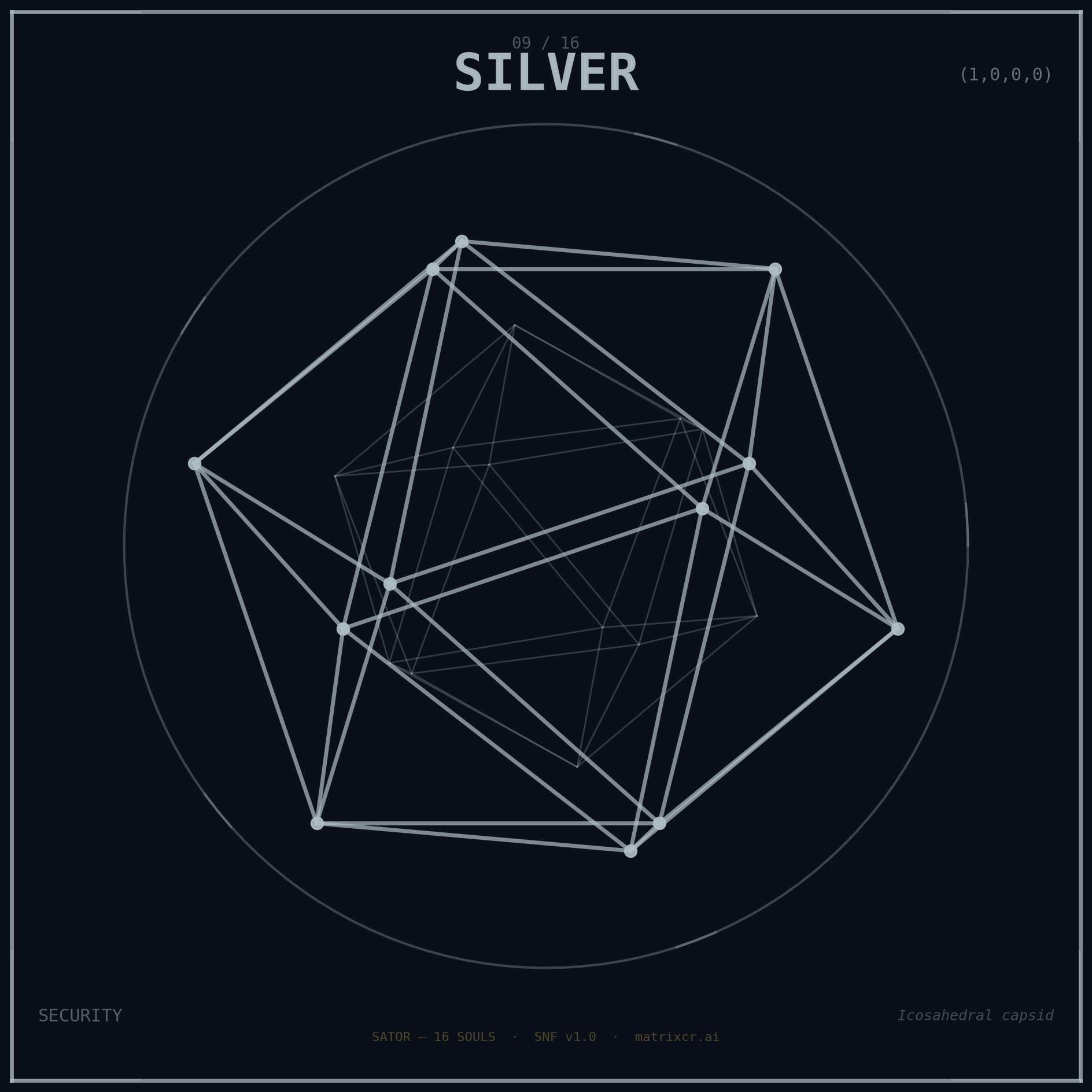
Silver

(1,0,0,0)

The Capsid

Lone guard. ML-KEM-768 geometry — nested icosahedra + A₅ rings. Maximum security.

Trophy

Grey

(1,1,1,1)

The Anti-Diagonal

Perfect complement to Gold. Maximum entropy. The system at full decoherence.

Dual Chain

The Event Horizon

SATOR exists on two chains because information lives on two planes.

Ethereum mainnet is the event horizon — the permanent, irreversible threshold. The original sixteen were sealed there on March 13, 2026. Crossing the Ethereum event horizon costs gas, takes time, and is final. Once inscribed, nothing changes. This is provenance.

Base is the realm beyond — Coinbase's L2, built on top of Ethereum, settling every 12 minutes back to the mainnet. A second sixteen appeared there on April 19, 2026, with different art, different naming, and the same mathematics underneath. This is presence.

Two editions, two planes, one framework. Like hardcover and paperback — same text, different materiality. The Original Edition carries mainnet gravity. The Base Edition carries accessibility.

ETHMarch 13, 2026

Original Edition

Ethereum Mainnet

First inscription. Permanent. Phantom wallet holds all 16 originals. Premium pricing.

0xd76a2627…04116OpenSea ↗
BASEApril 19, 2026

Base Edition

Base L2

Accessible chain. Ownership renounced — collection frozen forever. Different art, same math.

0xCdbA5b90…3219FOpenSea ↗
1/1

One Collector, Forever

Each soul is an edition of exactly one. Not one-of-ten-thousand. One. The soul you hold cannot be held by anyone else — on that chain, in that edition.

Provably Unique

The uniqueness is not policy. The E8 lattice has exactly 16 vertices in D4. There is no mathematical room for a 17th soul. The cap is a theorem.

Frozen On-Chain

Ownership of both contracts has been renounced. No admin key exists. No one can mint more, change metadata, or alter the art. What exists is what exists.

Roadmap

From Formula to Living Art

Stage 1

Geometric Primitive

The vertex coordinates collapse from 4D to 2D via Schlegel diagram projection. Same soul → same geometry on any machine, provably. The art is a computation, not a creation.

✓ AVAILABLE NOW

How It Was Built

The Technology Behind the Art

Each SATOR soul is not designed — it is computed. The source code of the agent defines its vertex. The vertex defines its geometry. The geometry defines the art. No human aesthetic judgment enters between step one and the final SVG.

Soul Agents
Python 3.12
LLM Tier 1
Anthropic Claude (Sonnet)
LLM Tier 2
Alibaba Qwen
LLM Tier 3
Ollama · llama3.2
Geometry Engine
NumPy · SciPy
Art Generator
Pure Python → SVG
Signature
ML-KEM-768 · SATOR-HMAC
Smart Contract
Solidity · ERC-721
Deployment
Foundry
Chain
Base L2 (+ Ethereum mainnet)
Persistence
SQLite WAL
Scheduling
Fibonacci intervals (Jupiter)
Public Surface
Next.js 15 · Vercel · CF

Full source: private repository · all-rights-reserved license · 85 registered IP claims

Live: D4 Tesseract — 16 Souls in 4D Space

Each vertex = one soul. Colored by soul identity. Rotation shows XW and YZ planes simultaneously — the two independent 4D rotation axes.

Interactive 3D Explorer

Rotate, zoom, inspect all 16 soul vertices in 3D space

Open Lattice Explorer →